


Latest news

The Financial Accounting Standards Board (FASB) total accounting support fee for 2026 decreased 11% from 2025, to approximately $29.2 million (based on $32.8 million in 2025). The Governmental Accounting Standards Board (GASB) accounting support fee decreased 9% year-over-year. Fee invoices will be mailed in late April or early May.

The Conference Board reported on Thursday that January economic indicators showed signs of cooling, and it lowered its 2026 growth forecast by 0.1 percentage points to 2% due to the Iran conflict. In the Leading Economic Index, red flags flashed, including declines in consumer expectations, drops in building permits, and decreases in new manufacturing orders. The Federal Reserve kept interest rates unchanged the same day, but officials were divided over oil price shocks and the inflation outlook.

Rivian said in a securities filing on Thursday that it no longer expects positive adjusted EBITDA in 2027 due to accelerated autonomous driving technology development. The company's CFO had previously hinted at increased related investment, and it has partnered with Uber, which will invest up to $1.25 billion and purchase up to 50,000 autonomous R2 vehicles.

The U.S. Attorney's Office for the Southern District of New York announced Thursday that Supermicro co-founder Yih-Shyan "Wally" Liaw, Taiwan sales manager Ruei-Tsang "Steven" Chang, and contractor Ting-Wei "Willy" Sun were indicted for allegedly covertly shipping servers equipped with cutting-edge American AI technology to China. Supermicro said it has not been named as a defendant but has suspended Liaw and Chang and terminated its relationship with Sun.

The White House released legislative recommendations for a national AI policy framework on March 20, calling on Congress to establish unified federal standards that 'minimize burdens' to replace conflicting state AI laws. The framework focuses on priorities such as streamlining federal data center permitting, addressing copyright issues in AI model training, and cultivating AI talent, while explicitly opposing the creation of a new federal AI regulatory agency. Consumer advocacy groups criticized the framework for favoring large tech companies, while industry organizations supported its pro-innovation orientation.
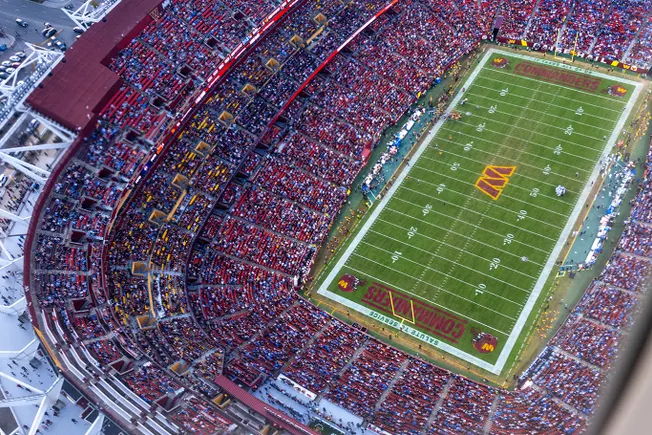
Sam Darnold won the Super Bowl but received a $249,000 tax bill from California, sparking widespread discussion. This article clarifies the facts, explains how the 'athlete tax' works, its historical background, and differences in state tax rates, illustrates its impact through three cases, and finally offers compliance recommendations for CFOs.

Idaho Governor Brad Little signed HB 563 on Wednesday, adding an alternative pathway for Certified Public Accountant (CPA) licensure. Starting July 1, 2026, candidates can obtain a license through a bachelor's degree plus two years of work experience and passing the CPA exam, without needing to complete 150 college credits. The state also retains the traditional pathway of 150 credits or a master's degree. This move makes Idaho join over 30 states nationwide in reform efforts aimed at alleviating the accounting talent shortage.

U.S. initial jobless claims fell to a two-month low last week, indicating limited layoffs but also sluggish hiring activity. Federal Reserve Chairman Jerome Powell stated that the labor market is in a "zero-growth equilibrium" and pointed to downside risks.

Tennessee Republican Senator Marsha Blackburn released a comprehensive AI proposal draft on Wednesday, aiming to establish a unified federal regulatory framework for AI. The draft requires public companies and other entities to disclose AI-related layoffs, job changes, and other workforce impacts to the Department of Labor quarterly, with violators facing civil penalties of up to $1 million per occurrence. The proposal also covers AI safety rules, developer responsibilities, digital likeness protection, and seeks to preempt state laws.

GM CFO Paul Jacobson noted at the BofA 2026 Global Auto Summit that the slowdown in EV growth is an opportunity for the company to optimize its cost structure. The company has recorded $6 billion in related charges due to strategic adjustments and plans to complete restructuring by the end of the second quarter of 2026. Despite tariff pressures, the company's adjusted free cash flow for full-year 2025 reached $10.6 billion.