


Latest news

Data released by ISM on Wednesday showed that U.S. service sector activity expanded for the seventh consecutive month in January, but the new orders index fell to a seven-month low, reflecting businesses' concerns about the Trump administration's tariffs and immigration policies. Federal Reserve officials said interest rates will remain unchanged until the policy outlook becomes clearer.

Richard Galanti, the former chief financial officer of Costco Wholesale, officially retired on Thursday after serving in the role for about four decades. He transitioned to an advisory role in March and attended his last annual meeting in January. On the eve of retirement, he returned to the company office to collect personal items and shared his views on succession, regulation, and the future.

In its fourth-quarter 2024 earnings report, ADM announced it will cut approximately 600 to 700 positions (including about 150 vacant roles) as part of achieving $200 million to $300 million in cost savings for 2025 and up to $750 million in savings over the next three to five years. CEO Juan Luciano cited a weak global market environment and policy uncertainty in 2025. CFO Monish Patolawala stated that the company is still working to eliminate material weaknesses in financial reporting related to inter-segment sales, which had led to a restatement of last year's financial results.

The Conference Board reported on Tuesday that in response to a "dramatic shift" in government policy, U.S. companies are reducing philanthropic activities aimed at promoting racial and gender equality while strengthening support for education and economic opportunity. The survey shows that the biggest challenge facing corporate philanthropy leaders is proving return on investment, followed by navigating political uncertainty and polarization, and measuring social impact. Some companies are adjusting their communication language to be more neutral and expect regulatory changes will not significantly alter budgets.

China's Ministry of Finance announced on Tuesday that it will impose additional tariffs on certain goods originating from the United States starting February 10, with a 15% tariff on coal and liquefied natural gas, and a 10% tariff on crude oil, agricultural machinery, and some automobiles. This move is in response to the Trump administration's tariff increases. Meanwhile, China announced export controls on metals such as tungsten and tellurium.

Latest data show that U.S. manufacturing activity expanded for the first time in 26 months in January, with business optimism rising to a 34-month high. However, the Trump administration's use of tariffs to influence Canada, Mexico, and China has raised concerns about rising inflation and supply chain disruptions.

Since Saturday, February 1, when Trump imposed tariffs on Canada, Mexico, and China under the International Emergency Economic Powers Act, Canada quickly announced countermeasures, which were then suspended on Monday; Trump agreed to suspend tariffs on Mexico and Canada for 30 days. Markets were hit, and consumers and businesses faced uncertainty. Economists and business groups warned that the impact of these tariffs could exceed that of the trade war with China during his first term.

Flutterwave's CFO Mitesh Popat said the company is focusing on achieving stable revenue and sustainable profitability before any potential IPO. He highlighted resilience amid macroeconomic volatility and steps to enhance credibility following past legal and cyber incidents.

The Fed's preferred inflation gauge was largely flat in December, in line with policymakers' expectations and reinforcing their recent decision to hold benchmark interest rates steady. The core PCE price index rose 2.8% year over year, still above the 2% target.
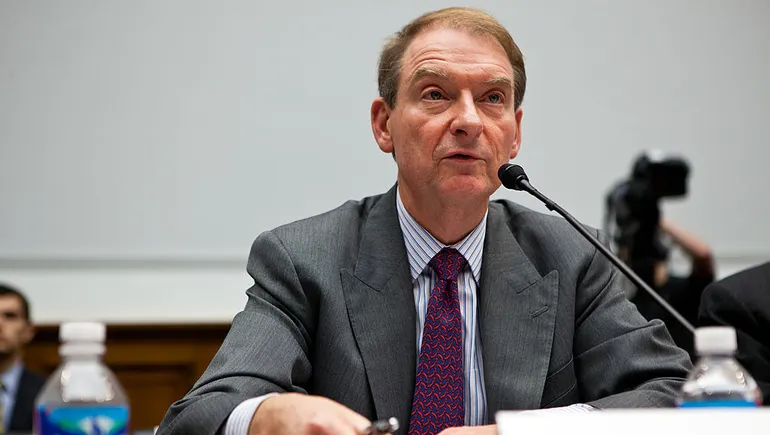
The SEC chairmanship is about to change, with Paul Atkins expected to succeed Gary Gensler, bringing a more moderate approach to enforcement and rulemaking. Based on analyses from securities lawyers and former SEC officials, this article explores how CFO regulatory burdens may shift, including the shelving of climate disclosure rules, a pivot in cryptocurrency regulation, and prospects for PCAOB reform.