


Latest news

The Conference Board released a report on Monday stating that U.S. economic growth will slow in the second half of 2025, mainly due to tariffs raising goods prices and weakening consumer confidence. Although the likelihood of a recession is low, GDP growth is expected to decline noticeably from 2024 levels, with an estimated growth of 1.6% this year. The Yale Budget Lab calculates that tariffs will increase the average American household's annual spending by $2,800 and push up the unemployment rate by 0.5 percentage points.

Global commercial real estate services firm JLL released the '2025 Global Space Planning Benchmark Report', indicating that although most companies strengthened return-to-office requirements at the beginning of the year, office space configurations are trending toward compactness: the target area per person has been reduced to 132 square feet, the proportion of shared workstations has increased, and the standard sizes of enclosed offices and open-plan workstations have simultaneously shrunk to balance costs and hybrid work demands.

Edge AI, by pushing intelligent processing down to the data source, is bringing new possibilities for real-time fraud detection, personalized interactions, and operational optimization to the financial industry. Gartner predicts that by 2025, 75% of enterprise data will be generated and processed outside core data centers or the cloud. This article analyzes how edge AI empowers financial institutions to enhance customer experience, strengthen data security, and optimize internal processes, and introduces infrastructure solutions such as the Dell AI Factory that support this transformation.

The University of Michigan's July survey shows consumer confidence rose to a five-month high, with one-year inflation expectations dropping from 5% to 4.4%, but household financial expectations remain weak. There is division within the Federal Reserve over whether to cut rates this month, with the persistent impact of tariffs on inflation being a key variable.

John Gronen, CFO of Yooz, an accounts payable software company headquartered in Dallas, Texas, is facing an ethical dilemma: whether to offer earned wage access (EWA) services as requested by employees. While he acknowledges that EWA can help employees avoid credit card debt, he fears that instant spending could leave them unable to pay rent at the end of the month. A recent company survey of about 1,000 employees found that only 32% prefer instant payment, while 58% still favor a fixed payday. Gronen currently leans against launching the service but is working with HR to assess implementation costs and employees' real needs. In a previous role, he opposed offering BNPL services to sports betting companies, arguing that gambling should be paid in cash. If ultimately implemented, he advocates that the company bear the cost rather than charging employees, to boost satisfaction and reduce turnover.
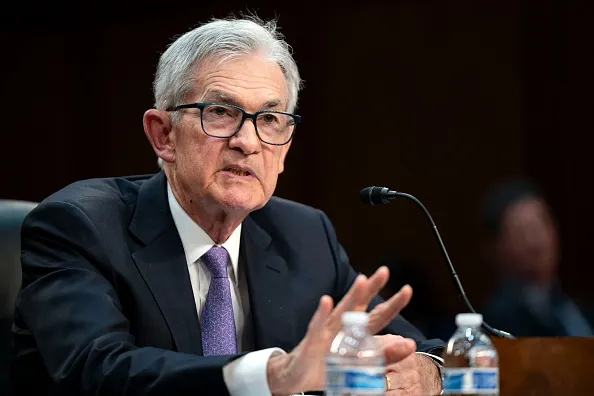
Federal Reserve Chair Jerome Powell wrote to OMB Director Vought on Thursday in response to accusations of "serious mismanagement" in the renovation of Federal Reserve buildings. Powell stated that the projects involve two historic buildings from the 1930s that have never undergone comprehensive renovation. Meanwhile, White House officials have used the project as a focal point to question Powell's suitability for his role, while potential successor Kevin Warsh has called for a "regime change" at the Fed.
In an exclusive interview with CFO.com, Atif Zaim, KPMG's new Vice Chair and U.S. Managing Partner, shares his insights on the evolution of leadership, serving CFOs and senior executives, and discusses the importance of the 150-hour CPA rule, team motivation, and clarity of purpose.

Nordstrom announced Thursday that it has appointed Dollar General's Chief Financial Officer Kelly Dilts as its new head of finance, effective August 29. Dilts had been with Dollar General for about two years, and her departure comes after the company reported better-than-expected quarterly results.

Data from the U.S. Census Bureau show that retail sales rose 0.6% month-over-month in June, reversing the previous two months' declines, but consumer confidence remains weak. San Francisco Fed President Daly, New York Fed President Williams, and Fed Governor Kugler all warned that tariffs could push up inflation and weigh on spending, with GDP growth expected to slow to around 1% this year.

During the "Business of Risk" online event co-hosted by CFO Dive and ESG Dive, Orbia CFO Jim Kelly and IMAX CFO Natasha Fernandes discussed responses to tariff policy. They advised companies to focus on the long term in decision-making, employ scenario planning and flexible strategies, and noted that although the tariff environment fluctuates frequently, companies must weigh costs against risks and avoid hasty actions.