


Latest news

Against the backdrop of a financial talent shortage and economic uncertainty, corporate demand for interim CFOs has grown 103% year-over-year. This short-term executive hiring model not only helps companies navigate transitional periods but also offers new career opportunities for financial leaders. This article analyzes the appeal of interim CFOs, the advantages of skill matching, and their key role in succession planning.

Against the backdrop of the latest IPCC report urging global emission reductions, CDP data shows that most corporate climate transition plans lack credibility. Benchmark Gensuite executive Donavan Hornsby writes that companies should go beyond compliance-driven approaches, integrate emissions accounting with EHS and ESG management, and use integrated data platforms to identify resource efficiency and supply chain risks, thereby transforming sustainability challenges into opportunities for value growth.

Breakthroughs in artificial intelligence have excited corporate executives, but the accompanying risks and skepticism cannot be ignored. For chief financial officers tasked with weighing benefits against risks, making rational decisions amid the noise poses a key challenge. Drawing on expert opinions and industry practices, this article proposes four practical suggestions: building a responsible AI framework, broadening the ROI evaluation perspective, acknowledging technological limitations, and starting with small-scale applications.

After record-breaking US IPOs in 2021, the market cooled, and IPO numbers plummeted in 2022. For companies intending to go public, CFOs need to initiate IPO preparations early, including financial audit compliance, building quarterly reporting capabilities, and talent acquisition, where external advisors' practical experience may be crucial to a successful listing.

Surveys show that over one-third of CFOs will devote 30%-50% of their time to sustainability-related matters this year, and 81% plan to increase investment in the climate transition. The Head of Sustainable Finance for the Americas at ING believes that the public and private sectors need to collaborate to provide multi-layered capital to support corporate decarbonization and the energy transition.

Facing multiple economic pressures, inventory management has become a focus for CFOs. EY expert Peter Kingma advises CFOs to optimize inventory by challenging assumptions, clarifying decision rights, and becoming proactive investors, while leveraging AI for scenario planning to navigate an uncertain environment.
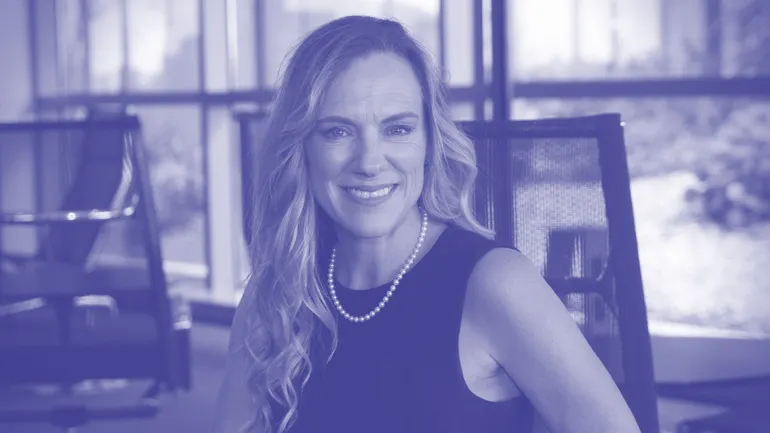
From Angela Pierce's solitary struggle in investment banking in the 1990s to today's record-high proportion of female CFOs, four female financial leaders—Angela Pierce, Kelly Steckelberg, Natalya Davick, and Mandy Fields—shared how they overcame self-doubt, broke down workplace barriers, and encouraged more women to boldly pursue senior positions.

After Silicon Valley Bank (SVB) collapsed on March 10, its auditor KPMG drew attention for not flagging going-concern risks in the audit opinion signed on February 24. More notably, KPMG had served as SVB's auditor since 1994, and this 29-year relationship has reignited debates about audit tenure limits. This article synthesizes expert opinions, analyzing the pros and cons of audit independence, tenure rotation, and the current regulatory landscape.

The International Sustainability Standards Board (ISSB) and the U.S. Securities and Exchange Commission (SEC) have recently signaled a softening on climate risk disclosure rules: the former plans to release global guidelines by June with an effective date of January 1, 2024, while the latter aims to issue final rules by May. Facing over 14,000 opposing comments, regulators are considering 'soft launch' measures such as phased implementation and relaxing Scope 3 emissions requirements to balance corporate compliance burdens with investor information needs.

Layoffs are one of the toughest decisions CFOs face, involving employee livelihoods and corporate interests. Based on recent layoff communication missteps at companies like Google and Twitter, this article proposes a six-step professional communication framework: developing a communication plan in advance, clarifying notification hierarchy and methods, showing empathy, responding quickly to compensation issues, maintaining transparency and accountability, and having senior executives continuously engage in external communication. These steps aim to alleviate the pain of layoffs, ensuring messages are delivered clearly, humanely, and in line with corporate values.