


Technology

A report released Thursday by mobile security company Lookout indicates that mobile phishing scams are increasingly severe, yet enterprises are not paying enough attention to this threat. The survey shows that nearly 60% of enterprises have experienced incidents involving executive impersonation via SMS or voice, and 77% have encountered at least one such attack in the past six months, but only half of respondents expressed high concern.
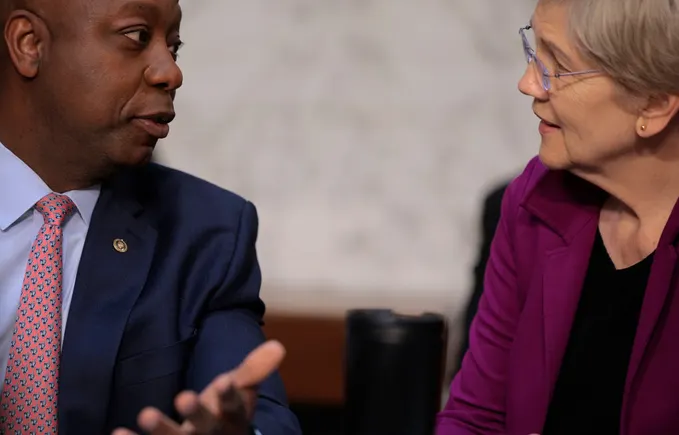
The U.S. Senate Banking Committee recently held a hearing to discuss how to build a regulatory framework for the market structure of crypto assets. Blockchain Association CEO Summer Mersinger, former CFTC Chairman Timothy Massad, and others testified, engaging in debates over regulatory lag, asset classification, illegal activities, and conflicts of interest between politics and business. This article distills six key points.

As generative AI rapidly permeates corporate operations, CFOs not only need to evaluate the value of technology investments but should also proactively integrate into cross-functional decision-making. Beamery CEO Sultan Saidov emphasizes that financial leaders must collaborate with CIOs, CHROs, and others, examine organizational capabilities from the perspective of 'human-machine task allocation,' and confront talent risks. This article outlines his core viewpoints and industry data.

Flexera's annual IT asset management report shows that enterprise SaaS audit costs continue to rise while tech stack visibility declines. Nearly half of surveyed enterprises have spent over $1 million on software audits in the past three years, and only 43% have full tech stack transparency. As cloud services and AI drive consumption-based pricing, management complexity increases, prompting FinOps and ITAM teams to seek collaborative responses.

AI layoffs may be underestimated: Challenger report reveals hidden details behind technology updates
According to a report by Challenger, Gray & Christmas, U.S. employers cut 20,000 jobs in the first half of 2025 due to technological factors such as automation, but only 75 were explicitly attributed to AI. Analysts believe that many companies may classify AI-related layoffs as "technology updates," causing the data to be underestimated.

Based on a global survey jointly released with Mastercard in 2024, this article analyzes the impact of payment delays on corporate cash flow and delves into how emerging technologies such as programmable payments, smart contracts, stablecoins, central bank digital currencies, and virtual cards drive financial automation. It also introduces SAP's solutions in the field of advanced payment management, helping enterprises achieve centralized payment processing, in-house banking functions, and seamless integration.

The U.S. Senate passed a sweeping tax and spending bill on Tuesday but rejected a proposal to pause state AI regulations for 10 years. The provision had passed in the House version but was removed by the Senate in a 99-to-1 vote, with only Republican Senator Thom Tillis of North Carolina opposing. Earlier, a five-year compromise proposed by Senate Commerce Committee Chairman Ted Cruz also failed to reach consensus.

Tennessee Republican Senator Marsha Blackburn said Monday evening that the revised Senate proposal to pause state-level AI regulation remains "unacceptable," dealing a significant blow to the efforts of the bill's lead sponsor, Senate Commerce Committee Chairman Ted Cruz, to rally support. Blackburn stated in a declaration that the provision could allow big tech companies to continue exploiting children, creators, and conservatives. Earlier, U.S. Commerce Secretary Howard Lutnick had praised the updated language as a "pragmatic compromise." The proposal, attached as an amendment to a sweeping tax and spending bill, now faces Democratic opposition and procedural challenges.

As emerging technologies such as artificial intelligence accelerate the evolution of finance functions, the controller's role is shifting from a traditional data steward to a strategic leader. Kristi Chapman of EY Americas said in an interview with CFO Dive that modern controllers need cross-departmental data integration capabilities and must become trusted advisors to the CFO. Meanwhile, technology adoption and talent demands are also changing, with EY's 2024 survey showing that 89% of controllers have adopted AI.

Google Cloud welcomes a new CFO: Kobi Bar-Nathan, former head of finance for Oracle Cloud Infrastructure, took on the role this month. Against the backdrop of Google Cloud's 28% year-over-year revenue growth, this appointment highlights the increasing demand for financial leadership amid intensifying competition in AI infrastructure.